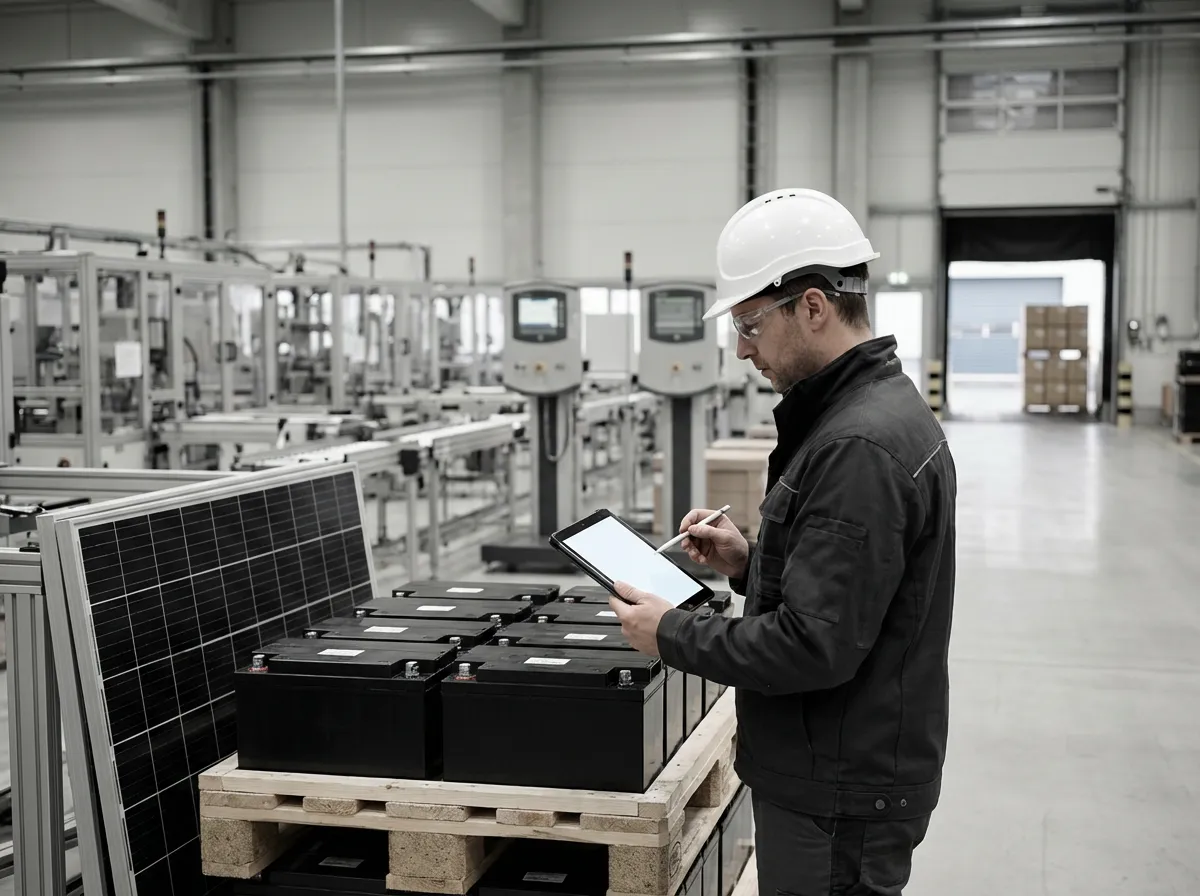
BESS suppliers by region in China
China Battery Sourcing Playbook (2026): A Company-Driven, Data-Accurate View of the Supply Chain
If you are sourcing batteries or BESS systems from China, most available guides will tell you to focus on regions or “battery hubs.” This is an oversimplification. China’s battery industry is not primarily organized by geography, but by a relatively small number of dominant companies and their production ecosystems, which are then distributed across multiple regions.
Understanding China sourcing therefore requires answering a different question. It is not “where are the battery cities,” but rather “which companies control supply, and where are their actual production bases.”
Table of content: BESS suppliers by region in China
China Battery Sourcing Playbook (2026): A Company-Driven, Data-Accurate View of the Supply Chain
A Breakdown of Battery “Towns” in China (and why you should care)
The five hubs shaping China’s battery ecosystem
2) Guangdong: Shenzhen, Dongguan, Foshan
3) Jiangsu: Changzhou, Liyang, Yancheng
4) Zhejiang: Wenzhou, Huzhou, Ningbo - “a battery township” evolution into new energy
5) Inland expansion: Hubei, Anhui, Sichuan
The three-layered structure buyers should use
Use-case driven sourcing (not location-based only)
Verification must go just beyond the basic checks
1) Is China’s battery supply chain organized by region or by company?
2) What does it mean to be “in the CATL ecosystem” (vs just buying CATL cells)?
3) Which regions are strongest for BESS integration (BMS/EMS + system-level engineering)?
4) How should I choose between Fujian, Jiangsu, Guangdong, Zhejiang, and inland regions?
5) What are the most common red flags during supplier evaluation?
6) What should a serious verification process include for BESS suppliers?
7) Why do smaller buyers struggle to access top-tier suppliers in regions like Ningde?
8) What is the biggest mistake international buyers make when sourcing in China?
The Chinese battery supply chain today is shaped by a handful of Tier-1 and Tier-1.5 manufacturers. At the top level, CATL and BYD define the industry in terms of scale, technology, and supply chain control. Below them, companies such as EVE Energy, CALB, Gotion High-Tech, and REPT Battero play a critical role in supplying both EV and energy storage markets. A further layer includes fast-growing energy storage-focused players such as Hithium, Sunwoda, and SVOLT.
For any international buyer, this means that sourcing decisions are effectively decisions about entering one of these company ecosystems, rather than simply selecting a factory from a region.
From a geographic perspective, production is distributed, but it is anchored around where these companies have built capacity.
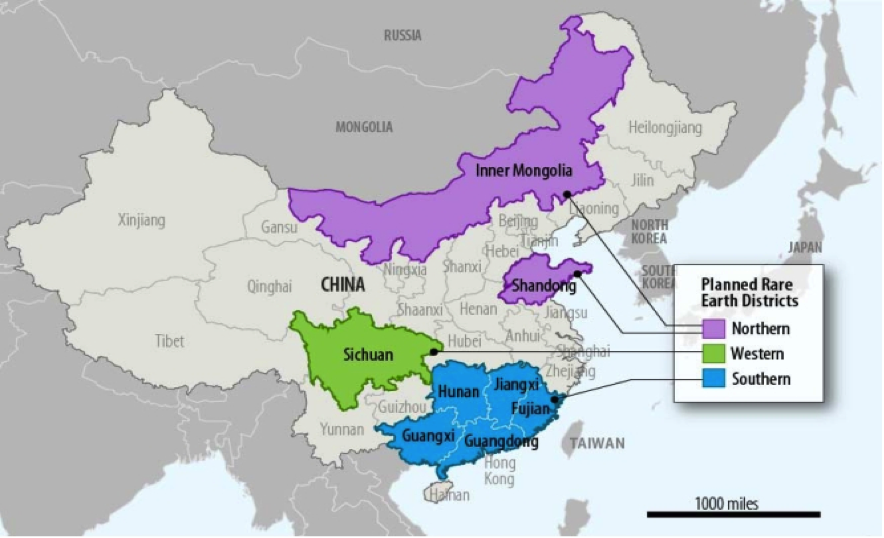
A Breakdown of Battery “Towns” in China (and why you should care)
China’s industrial development has long favored regional specialization: clusters of factories, sub-suppliers, testing labs, logistics providers, and talent pools that grow around a dominant category. In batteries, that clustering is alos relevant because the supply chain is complex: raw materials, electrode manufacturing, cell production, BMS, thermal management, enclosures, EMS integration, and compliance documentation.
The beauty of all of this is the efficiencies this creates for everyone included.
The five hubs shaping China’s battery ecosystem
1) Fujian: Ningde and Xiamen
In Fujian province, the Ningde and Xiamen area forms one of the most important battery clusters globally. CATL’s core production base is located in Ningde, and this region represents one of the highest concentrations of advanced lithium battery manufacturing in the world. In Xiamen, companies such as Hithium have established strong positions in energy storage.
Ningde has been positioned by official sources as a major lithium battery powerhouse and is closely associated with large-scale lithium battery production. For buyers, Ningde represents a different advantage: global-scale battery industrial gravity — which often times attracts better upstream partnerships, more experienced engineering talent, and more formalized quality systems.
This cluster is characterized by high technical maturity, strong export orientation, and well-developed engineering systems. However, access to top-tier suppliers in this region is often limited for smaller buyers, as priority is given to large-scale and strategic customers.
Contact us for more regarding these suppliers here.
2) Guangdong: Shenzhen, Dongguan, Foshan
In Guangdong province, particularly in Shenzhen, Dongguan, and Foshan, the industry takes on a different profile. Shenzhen is the headquarters of BYD and remains one of the most important centers for battery technology, electronics, and system integration. EVE Energy has significant operations in the region, while REPT Battero has established production capacity in Foshan.
This area benefits from a deep electronics ecosystem, making it especially strong in BMS, EMS, and system-level integration. For buyers, Guangdong is often one of the best entry points for BESS systems, custom projects, and faster development cycles.
Procurement move: if your order volume is small, don’t lead with price. Lead with a credible ramp plan, clear specs, and a relationship strategy—or use an intermediary with established access. You can get our honest views in a short no pressure call about these suppliers here.
3) Jiangsu: Changzhou, Liyang, Yancheng
Jiangsu province, including Changzhou, Liyang, and Yancheng, represents one of the most complete battery manufacturing belts in China. Major players such as CATL (through Jiangsu-based entities), CALB, SVOLT, and Farasis have built extensive production capacity here.
The region combines scale, industrial discipline, and a well-developed supplier network. It is particularly suitable for buyers looking for reliable production, mid-to-large-scale BESS projects, and a balance between quality and accessibility.
Procurement move: shortlist suppliers here only after verifying business licenses, production scope, and traceability—then validate whether they truly manufacture to the specs that you need. Contact us for more regarding these suppliers here.
4) Zhejiang: Wenzhou, Huzhou, Ningbo - “a battery township” evolution into new energy
Zhejiang province, including Wenzhou, Huzhou, and Ningbo, is characterized by private manufacturing networks and high flexibility. REPT Battero is headquartered in Wenzhou and has become a key player in both EV and energy storage batteries.
Compared to Fujian and Jiangsu, Zhejiang offers faster response times and greater willingness to support customized or mid-sized projects. However, quality systems can vary significantly between suppliers, making verification and quality control especially important.
Procurement move: The suppliers here are usually consolidated for larger scale production but with the right approach they will be excited to work with you. Contact us for more regarding these suppliers here.
5) Inland expansion: Hubei, Anhui, Sichuan
Inland regions such as Hubei, Anhui, and Sichuan represent the next phase of industry expansion. EVE Energy has established major production capacity in Jingzhou, while Gotion High-Tech has a strong presence in Hefei.
These regions are driven by cost advantages and policy support, and they are increasingly important for scaling production. However, operational maturity and consistency can vary, and supplier evaluation requires greater attention.
The three-layered structure buyers should use
When viewed together, China’s battery supply chain can be understood as a three-layer structure:
Power centers defined by dominant companies such as CATL in Ningde and BYD in Shenzhen.
Manufacturing belts in Jiangsu, Guangdong, and Zhejiang, where large-scale production and system integration take place.
Inland expansion zones, where capacity is growing rapidly but may not yet match the consistency of more mature regions.
For procurement, this structure has direct implications. Most buyers assume that sourcing is a process of comparing multiple suppliers and selecting the best offer. In reality, a significant portion of supply is controlled by a limited number of companies. This means that sourcing is less about finding options and more about determining access, positioning, and the right entry point into the supply chain.
Use-case driven sourcing (not location-based only)
A practical sourcing strategy should therefore be based on use case rather than location alone.
For utility-scale BESS projects, suppliers connected to CATL, EVE Energy, or Hithium ecosystems are typically the most relevant, as they offer the scale, engineering capability, and reliability required.
For commercial and industrial (C&I) BESS applications, Jiangsu and Guangdong-based suppliers, including REPT and Sunwoda, provide a strong balance between customization and industrial capability.
For projects requiring low minimum order quantities (MOQs) or rapid development, Zhejiang and parts of Guangdong offer more flexibility, although this comes with increased quality risk and the need for tighter control.
One of the most important distinctions in China sourcing is the difference between nominal supplier identity and actual supply chain positioning. For example, purchasing from a supplier that claims to use CATL cells is not equivalent to being integrated into the CATL ecosystem. Traceability, allocation priority, and technical support can differ significantly depending on the relationship structure.
This is exactly where a partner like Moonick Asia becomes valuable: not because they “know China,” but because they operationalize the process—pre-audited suppliers, verification, negotiation leverage, and ongoing support when things may go wrong.
Verification must go just beyond the basic checks
Because of this complexity, supplier verification must go beyond just the basic checks. It requires confirmation of actual manufacturing capability, clarity on which processes are owned versus outsourced, and a clear understanding of upstream sourcing.
Engineering competence must also be evaluated, including the supplier’s ability to explain battery management systems, thermal management strategies, and failure handling. Documentation, traceability, and quality control processes must be consistent and verifiable.
Common risks in the market include companies presenting themselves as manufacturers without owning production lines, lack of transparency regarding upstream materials, and inconsistent or generic technical responses. These issues are not always visible at the quotation stage but can have significant impact on project outcomes.
For international buyers, the core challenge is not access to information, but the ability to interpret and act on it within the context of China’s company-driven ecosystem. This is where many sourcing efforts fail, particularly when decisions are based primarily on price or surface-level comparisons.
At Moonick Asia, sourcing is approached as an operational system rather than a transactional process. This includes working with pre-validated suppliers across different company ecosystems, conducting on-site factory verification, and aligning sourcing strategy with the specific requirements of each project. It also involves managing negotiation, contract structure, and ongoing quality control to ensure that supply matches expectations in practice, not just on paper.
If you are currently sourcing batteries or BESS systems from China and want to improve reliability while reducing risk, you can contact our team through the link provided on our website.
China does not have a single battery hub. It operates through a small number of dominant companies supported by geographically distributed production networks. Understanding this structure allows buyers to move from trial-and-error sourcing to a controlled, strategic approach.
FAQs
1) Is China’s battery supply chain organized by region or by company?
It is best understood as company-driven. Geography matters, but primarily because leading manufacturers build distributed production ecosystems across multiple provinces. For buyers, sourcing is often about gaining access to a specific company ecosystem and its upstream/downstream partners, not just selecting a factory in a well-known “hub.”
2) What does it mean to be “in the CATL ecosystem” (vs just buying CATL cells)?
Being in an ecosystem implies more than cell branding. It can affect allocation priority, traceability depth, technical support, and quality accountability across the supply chain. A supplier claiming CATL cells may still be outside the ecosystem in ways that matter operationally.
3) Which regions are strongest for BESS integration (BMS/EMS + system-level engineering)?
Guangdong (especially Shenzhen and surrounding cities) is often strongest for system integration because of the dense electronics ecosystem. This can be an advantage for custom BESS projects and faster development cycles, provided verification and QC controls are rigorous.
4) How should I choose between Fujian, Jiangsu, Guangdong, Zhejiang, and inland regions?
Choose based on use case, order size, and risk tolerance:
Utility-scale reliability and scale: prioritize Tier-1 ecosystems and mature engineering systems.
C&I projects: look for a balance of industrial discipline and customization capability.
Low MOQ / rapid iteration: prioritize flexibility, but increase verification intensity.
5) What are the most common red flags during supplier evaluation?
Common red flags include:
The company presents as a manufacturer but cannot prove ownership of production lines.
Upstream sourcing is vague or inconsistent.
Technical answers are generic, copy-pasted, or cannot be explained by engineering staff.
Documentation and traceability processes are unclear or change between conversations.
6) What should a serious verification process include for BESS suppliers?
A serious process should include:
Factory verification (what is truly manufactured vs outsourced)
Upstream traceability checks
Engineering review (BMS, thermal strategy, failure handling)
Documentation and QC process validation
Clear acceptance criteria and inspection checkpoints
7) Why do smaller buyers struggle to access top-tier suppliers in regions like Ningde?
In top clusters, suppliers often prioritize strategic customers and larger volumes. Smaller buyers can still succeed, but typically need stronger positioning: a credible ramp plan, clear specs, realistic timelines, and a structured procurement process that reduces supplier risk.
8) What is the biggest mistake international buyers make when sourcing in China?
Treating sourcing as a price comparison exercise rather than an access and risk-control problem. In a company-driven ecosystem, the winning strategy is usually: correct entry point, verified capability, clear specs, and enforceable quality controls.
Sources:
